
The healthcare industry has witnessed many advancements, innovations, and improvements in electronic technology in recent years. Healthcare equipment faced challenges like developing new treatment methods and diagnoses, home healthcare, remote monitoring, enhancing flexibility, improving quality and reliability, and improving ease of use.
A comprehensive portfolio of these technologies includes digital signal processing, MEMS, mixed-signal, and linear technologies that have helped to make a difference in healthcare instrumentation in areas such as patient monitoring and imaging. Another is the capacitance to digital converter technology that offers the use of highly sensitive capacitance sensing in healthcare applications. For instance, a capacitive touch sensor is a novel user input method that can be in the form of a slider bar, a push button, a scroll wheel, or other similar forms.
In a typical touch sensor layout, a printed circuit board may have a geometric area representing a sensor electrode. This area forms one plate of a virtual capacitor, while the user’s finger forms the other plate. For this system to work, the user must essentially be grounded with respect to the sensor electrode.
Analog Devices has designed their CapTouch controller family of ICs, the AD7147/ AD7148, to activate and interface with capacitance touch sensors. The controller ICs measure capacitance changes from single-electrode sensors by generating excitation signals to charge the plate of the capacitor. When another object, like the user’s finger, approaches the sensor, it creates a virtual capacitance, with the user acting as the second plate of the capacitor. A CDC or capacitance to digital converter in the ICs measures the change in capacitance.
The CDC can measure changes in the capacitance of the external sensors and uses this information to activate a sensor. The AD7147 has 13 capacitance sensor inputs, while the AD7148 has eight. Both have on-chip calibration logic for compensating for measurement changes due to temperature and humidity variations in the ambient environment, thereby ensuring no false alarms from such changes.
Both CDCs offer many operational modes, very flexible control features, and user-programmable conversion sequences. With these features, the CDCs are highly suitable for touch sensors of high resolution, acting as scroll wheels or slider bars, requiring minimum software support. Likewise, no software support is necessary for implementing button-sensor applications with on-chip digital logic.
The CDCs function by applying an excitation signal to one plate of the virtual capacitor, while measuring the charge stored in it. They also make the digital result available to the external host. The CDCs can differentiate four types of capacitance sensors by changing the way they apply the excitation.
By varying the values of these parameters, and/or observing the variations in their values, the CDC technology directly measures the capacitance values. The distance between the two electrodes affects the output of the CDCs in inverse proportions.
The family of Analog Device CDCs, the AD714x, AD715x, and AD774x, are suitable for applications involving a wide range of functions. These involve various input sensor types, input ranges, resolutions, and sample rates. Applications involve liquid level monitoring, sweat detection, respiratory rate measurement, blood pressure measurement, and more.
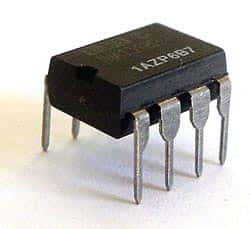 lot of study was done in the field and the initial operational amplifiers, based on vacuum tubes, were a result of the research done in Bell labs. By 1960’s, vacuum tube op amps had given way to solid state devices and hybrid operational amplifiers were entering the scene.


