Posts Tagged ‘Renewable Energy’

Solar powered LED light in a jar

Tuesday, July 10th, 2012

We love finding products that make great use of solar electricity and our electronic components. How about a solar powered LED light in a mason jar? Perfect for your backyard porch or for mood lighting at a party – or even as a night light in your bathroom, bedroom or kitchen!

The ones we found at MyGrillfriend.com give you a choice – it can be a soft deep orange colored light (referred to as a ‘sun jar’) or a beautiful shade of blue (called a ‘moon jar’) just by flipping a switch. The solar panel inside the jar collects the sun’s rays during the day, and automatically turns on when the lights go down. So easy to use and the LEDS will burn for years! Can I just tell you how much we love this product?!

Of course we had to take our Sun & Moon light apart to see how they made it. Nestled inside the neck of the jar is a highly efficient solar cell which is attached to a rechargeable battery and two low power LEDS – one blue and one orange. On the bottom of the insert is a diffuser which spreads the light throughout the frosted glass container. The switch, which is located on the solar cell, can be switched to blue, orange or even ‘off’ for conserving more energy. Go get one – or two – or ten! They are great!

How about a solar energy bikini for this summer?

Monday, May 21st, 2012

Solar power bathing suit

Solar power bathing suit

We thought we’d seen just about everything powered by solar panels or solar film until we came across this bikini. Made by Solarcoterie, this bathing suit is made of photovoltaic film strips sewn together in series with conductive thread! With a USB connection you could be laying on the beach and powering your iPod at the same time. The suit is constructed of 1″ x 4″ solar strips which terminate in a 5V regulator and a female USB connector – perfect for powering your iPod.

The down side is that the bathing suit is a currently custom made offering only so this is not something readily available at your local store. And, we don’t have the power specs but wonder if this also wouldn’t be a great solution for charging other small appliances needed at the beach – like most smartphones and iPads. Of course, this got us thinking about our dream ideas of powering a small cooler (imagine never needing ice at the beach!) or a small fan for cooling off while you’re baking in the sun. The biggest item on our wishlist is always a blender but we’ve got that covered with our battery operated one!

No matter what, we think this use of solar technology is genius.

IKEA completes solar installation in Tempe; 8 more planned

Thursday, October 21st, 2010

Yesterday, IKEA announced it had flipped the switch on newly installed dual rooftop solar units at its Tempe, Arizona store. The new system is one of the largest solar systems in the Phoenix area and the third such solar energy system for the Swedish home furnishings retailer; they have similar units already in place in Brooklyn, NY and Pittsburgh, PA.

The 300 kW solar energy system will generate 960,000 kWh of electricity annually from 2600 solar panels. It is the equivalent of reducing at least 760 tons of (C02) – which equals the emissions of 133 cars or powering 84 homes annually.

IKEA has other renewable energy initiatives in place. Already operating is solar water heating in stores in Charlotte, N.C.; Draper, Utah; Orlando, Florida; and Tampa, Florida. In addition, a geothermal system is being installed in a store under construction in Centennial, Colorado.

It was also announced that eight California locations are on deck for solar systems. In all, IKEA will be installing nearly 20,000 solar panels at eight of its California locations. IKEA expects the panels to generate 6.65 million kilowatt hours of electricity annually which is enough to power 580 homes for a year. Pending governmental approval, it will begin installing the renewable energy systems later this fall at existing stores in East Palo Alto, Emeryville, West Sacramento, Burbank, Costa Mesa, Covina and San Diego along with its large distribution center in Tejon.

The future of solar power: Flexible solar panels

Thursday, September 2nd, 2010

flexible solar panelsAs the popularity of solar energy grows, so does the selection of solar equipment that is made available. The big trend in solar energy right now is flexible panels.

Flexible solar panels have many advantages over traditional framed solar panels. The flexible solar panels are lightweight so there is less worry in the installation process and during use. They can also be installed on a semi-permanent basis because they are very easy to remove and install elsewhere.

Probably the biggest advantage is that they can be manufactured in any size or shape so they can be used in unconventional places.

In the past, the biggest disadvantage of the flexible solar panels is that they could only power low-wattage devices however that has changed significantly in the past year as new solar technology has been introduced. The newest flexible panels that are available for commercial applications have the ability to collect more energy than earlier versions.

In the future, we will be seeing even more advances in solar energy products based on this emerging technology.

Are deep water floating wind turbines on the horizon?

Monday, July 5th, 2010

Think of the possibilities of having deep water floating wind turbines to generate energy. Are they feasible? According the Journal of Renewable and Sustainable Energy, the answer is ‘yes’.

Engineers from the Marine Innovation and Technology have demonstrated that their buoyant, triangular platform which is called the WindFloat, could support a 5-megawatt wind turbine. They have conducted studies to determine whether the platform would stay erect. The platform was anchored to the ocean floor (at 164ft of depth), balanced with horizontal plates and a ballast system to counteract the motion of the ocean. The end result? The prototype did not topple.

That is good news for many. There are other similar projects in the works, but the possibility to see a 150 megawatt floating wind farm based on the WindFloat technology is now a distinct possibility. The projected date of installation is in 2012.

Turn your old PC fans into mini wind generators

Thursday, June 24th, 2010

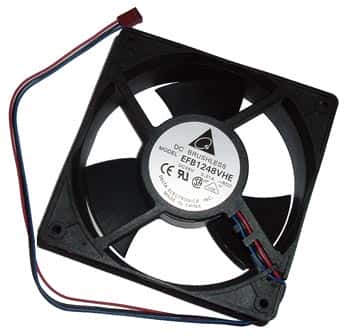
pc fanHere’s a great project that you can do either to experiment with wind turbines or to generate some energy! While the amount of energy produced is not overwhelming, this project can sure get your brain moving in the right direction.

The best thing about this project is that you probably already have everything you need lying around:

  • Thick plastic bottle
  • Old PC fan, bigger the better!
  • A few feet of small wire
  • A piece of wood about 1.5″ square and around 20cm long
  • Two lengths of steel tubing that slide inside of each other, about 1/2″
  • 6 Schottkey diodes
  • Epoxy
  • Super Glue
  • Zip ties
  • An old CD

You can find the full instructions including video here: http://www.instructables.com/id/Upcycle-your-old-PC-fans-into-mini-wind-generators/

If you want to have a kid-friendly wind turbine kit that already has all the pieces you need, we sell one of those. Our kits come with full instructions and all the materials needed to try your hand at creating a source of renewable energy – a wind turbine. The kit also comes with different experiments you can try with your wind turbine once it’s assembled. Great project for summer for the kids!

What is a wind turbine?

Friday, June 11th, 2010

A wind turbine is a rotary device that draws energy from the wind. This is different from a windmill, which draws energy from the wind but that energy is directly converted into mechanical energy used by some sort of machinery. Wind turbines are converted into raw electricity.

There are two main types, horizontal and vertical axis, of which the horizontal axis is more common. What are the differences between these two? Horizontal-axis turbines have the main rotor shaft and generator at the top of the tower. Horizontal axes must be pointed into the wind in order for them to work properly. However, the structure of the blades facing the wind also gives them a great angle of attack, which is the angle at which they have contact with the wind. This insures that the blades will be very efficient when converting wind to energy. Vertical-axis turbines are basically the same, except the axis is vertical, and they have the advantage of not having to face the wind.

Wind turbines are made up of three main components, the rotor component, generator component, and structural support component. The rotor component makes up about 20% of the cost, and consists of the blades. The generator component makes up 34% of the cost, and consists of the electrical generator, the control electronics, and usually a gearbox component for converting the low speed incoming rotation to high speed rotation which is better for generating electricity. Finally the structural support component makes up about 15% of the cost and consists of tower and rotor yaw mechanism.

Installing wind turbines can be a great way to save money on your electrical bills and create your own energy. They can be bought pretty inexpensively or you can even build your own and get the supplies to do it for even cheaper. If you’re interested in building a basic wind turbine to see how it works, you should buy an educational wind turbine kit to get you started.

(image: Flickr – therussiansarehere, Creative Commons)